
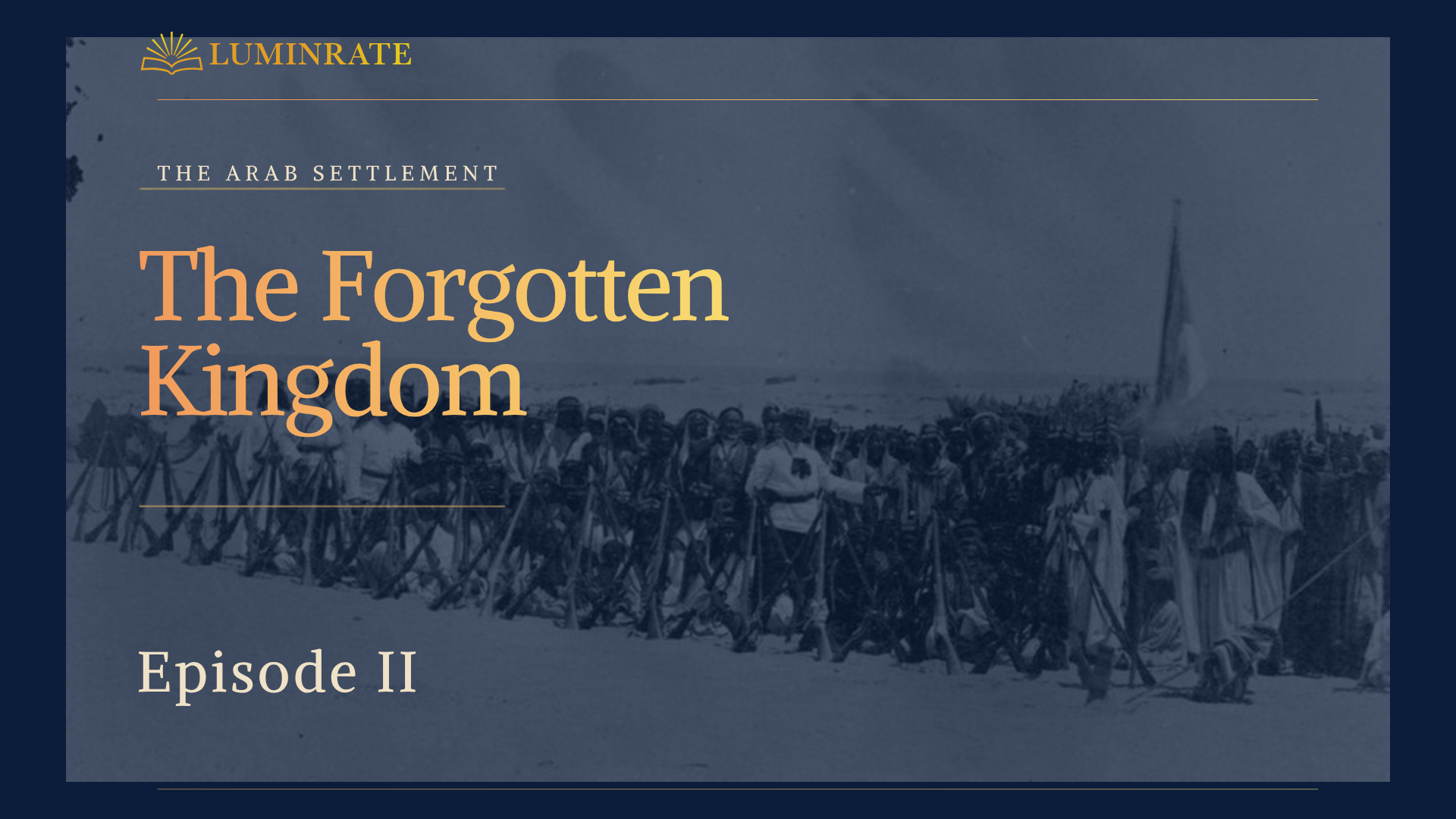
Saudi Arabia today is known for one of two things: first, as the birthplace of Islam, and second, for being one of the biggest oil producers in the world. But before Saudi Arabia became the powerhouse that it is today, the Peninsula was divided amongst rival powers.
The unification of the Peninsula was not solely a product of nationalism; it emerged during a time of geopolitical turmoil and foreign ambitions to redraw the region.
Over a hundred years ago, a smaller kingdom in the Peninsula led the charge towards Arab independence from Ottoman rule. This kingdom, the Hashemite Kingdom of Hejaz, was led by the Sharif Hussain who also served as the face of the Arab Revolt.
The story of the Kingdom of Hejaz began at the start of the 20th century. At that point, Ottoman rule over the Middle East and the Arab world had begun to fissure. As World War I began, the Ottomans sided with the Central Powers, making them an enemy to the might of Great Britain. At the same time, national sentiments across the Levant and the Arabian Peninsula paved the way for a new alliance between the Arabs and Great Britain.
With Britain on his side, Sharif Hussain, the Ottoman ruler of Mecca, declared the Arab Revolt against the Ottomans in June of 1916. Joined by other leaders and the famous Lawrence of Arabia, they began to weaken Ottoman strongholds throughout the region. The revolt’s success in the Peninsula and Mesopotamia paved the way for Hussain to proclaim himself the King of the Hashemite Kingdom of Hejaz.
The Kingdom stretched across the western front of the Arabian Peninsula alongside the Red Sea. It included major hubs such as Jeddah, Mecca, and Medina. Early in the Kingdom’s life, King Hussain was aided in his every move by the Brits. However King Hussain's role went beyond ruling over his subjects. He looked to inspire his fellow Arabs and tribesmen in moving against Ottoman rule, through ambition to become the Arab world’s sole leader.
To legitimize Hussain in a region the Ottomans had dominated for centuries and where they were considered the sole religious authority, the British ensured envoys of Muslim leaders from across the Middle East to visit Hussain.
It did not take many years for the happy marriage between Hussain and Great Britain to go sour. Hussain’s aspirations of leading the Arab world under his rule shattered when the Allied powers decided to overlook the governance of the region, leaving little influence to his reign.
As Hussain's dissatisfaction with Britain deepened, another star was making a name for himself in the heart of the Peninsula. Ibn Saud, Saudi Arabia’s founder, had already unified the eastern front of the Peninsula alongside the Persian Gulf with Najd. In more ways than one, Ibn Saud was King Hussain’s greatest rival in the Peninsula.
A number of telegrams between 1917 and 1922 showcase King Hussain’s dissatisfaction with Ibn Saud’s growing influence and expansion. This would often compel Great Britain to mediate between the two leaders.
As Ibn Saud’s sphere of influence continued to rise, Hejaz’s welfare declined. In a letter dated December 1921, the state of affairs in Hejaz were bluntly described; “On my arrival here, I found that the country was divided into various parts, and nothing remained except this town (Mecca).” Emir Faisal, son of King Hussain, later admitted, “The government being unable to form military forces and civil committees for sanitary work, managing affairs and keeping order in the country.”
As Ibn Saud’s influence expanded, his alliance with Great Britain strengthened. However, such alliance would not go unnoticed by his rival King Hussain. In a June 13, 1921 letter addressed to the Prime Minister of Great Britain, King Hussain raised his alarms and accused Ibn Saud of threatening his rule, writing:
“Ibn Saud who resides in Breida...has begun sending his troops attacking the environs of Medina and molesting our subjects...threatening them to attack them unless they rebel against our government.” In the same letter he showed his dismay at the fading British support towards him.
“I shall be compelled to ask the British government to take steps as soon as possible to have our country handed over to the above mentioned Emir as it seems he has shown his ability and his loyalty to Great Britain."
It was not until three years later that another war broke out between the Hashemites and Saudis in 1924. During the war, Mecca was the first to fall. By the end of 1925, the Saudis had control over Medina. By the dawn of 1926, the Hejaz was absorbed into Ibn Saud's Sultanate.
During that period, Ibn Saud also subdued another rival, the Rashidi Emirate. Their fall, less remembered today, is deeply connected to the story of Saudi unification and deserves a telling of its own.
By 1926, Ibn Saud ruled the Kingdom of Najd and Hejaz and their dependencies. It was not until September 23, 1932 that Ibn Saud officially bestowed the name The Kingdom of Saudi Arabia upon the land he ruled. And it is that September date that Saudis today proudly celebrate as their national holiday.
British India Office Records quoted in this article are licensed under the Open Government Licence v2.0.
Comments